Skip to content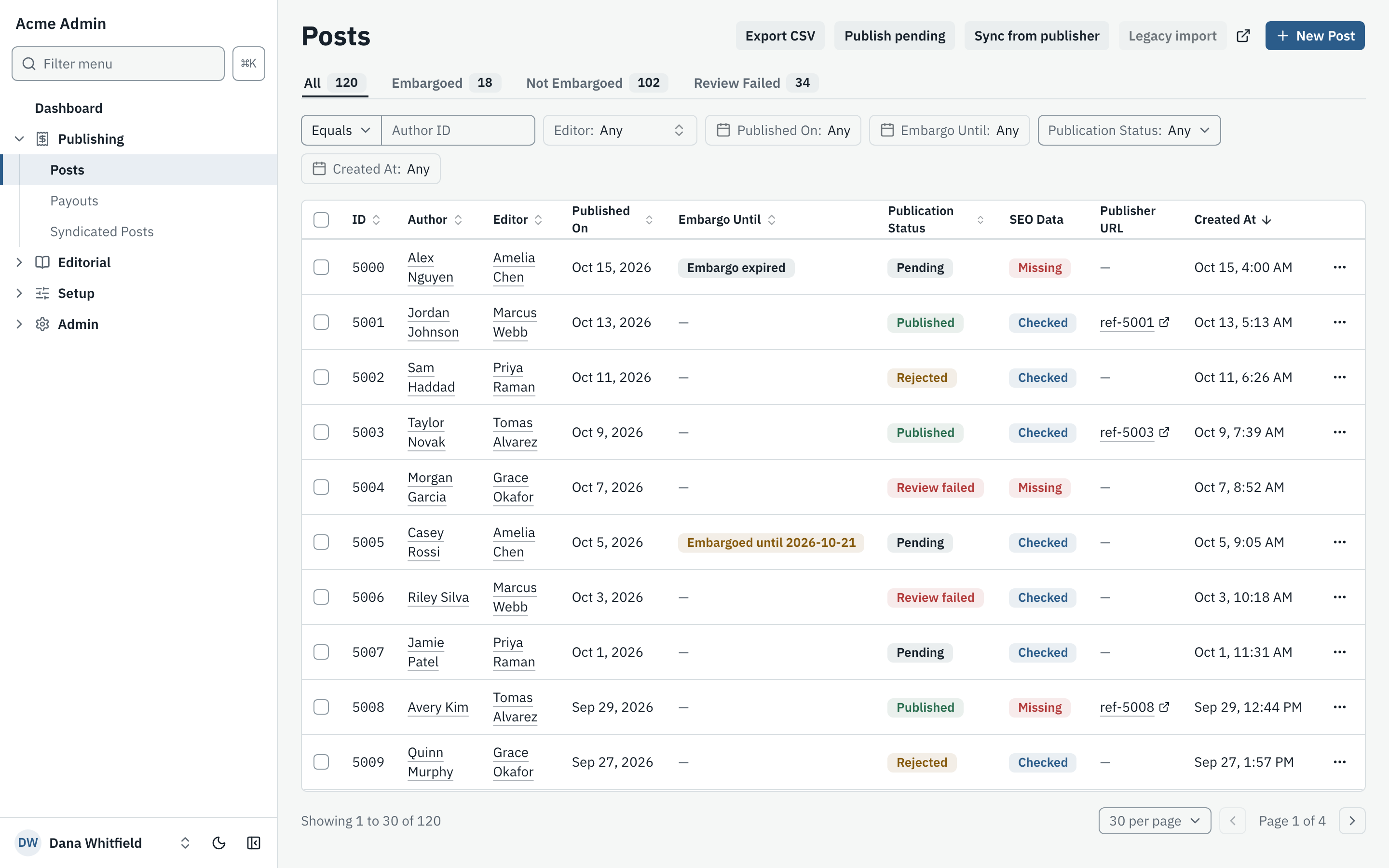
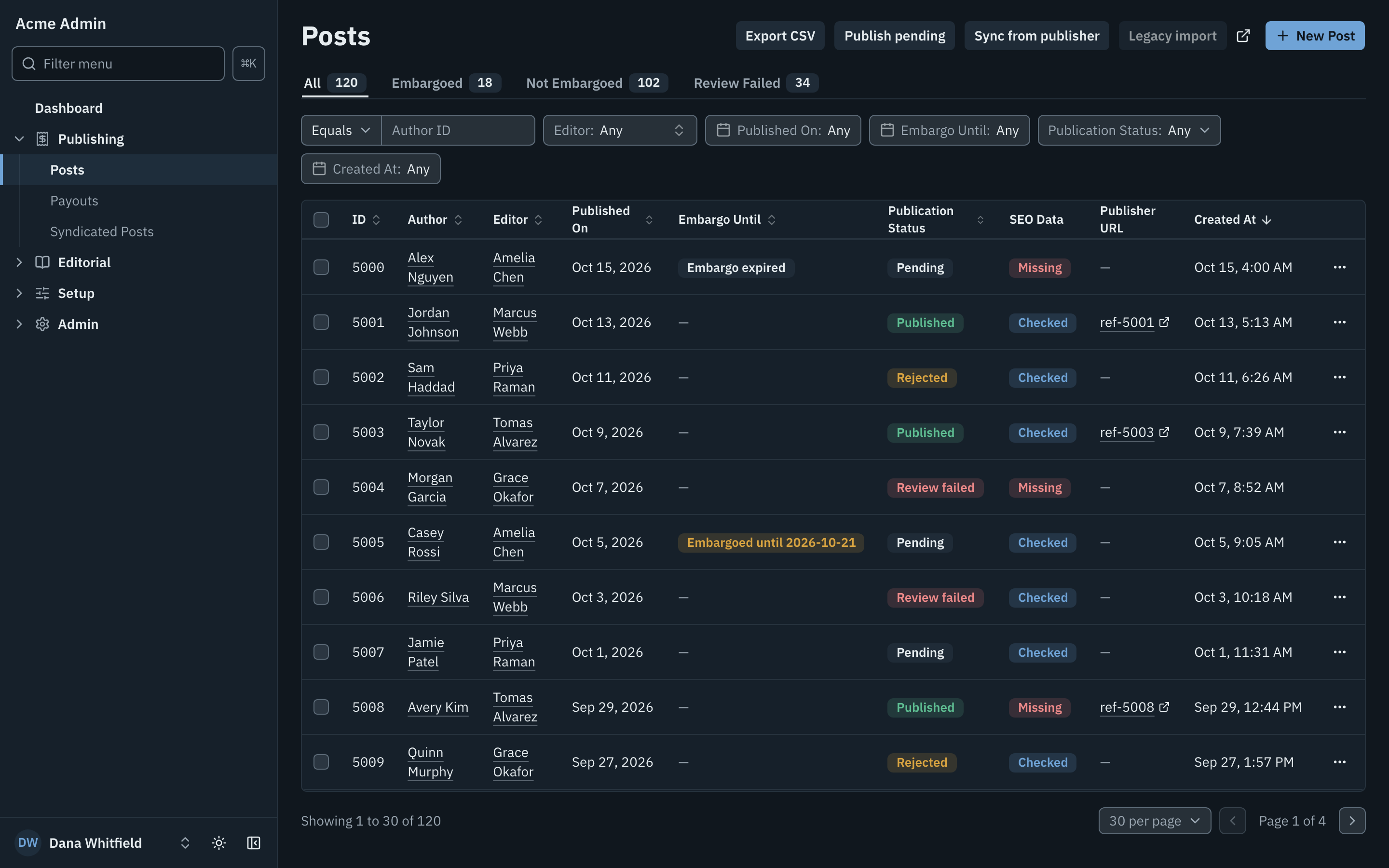
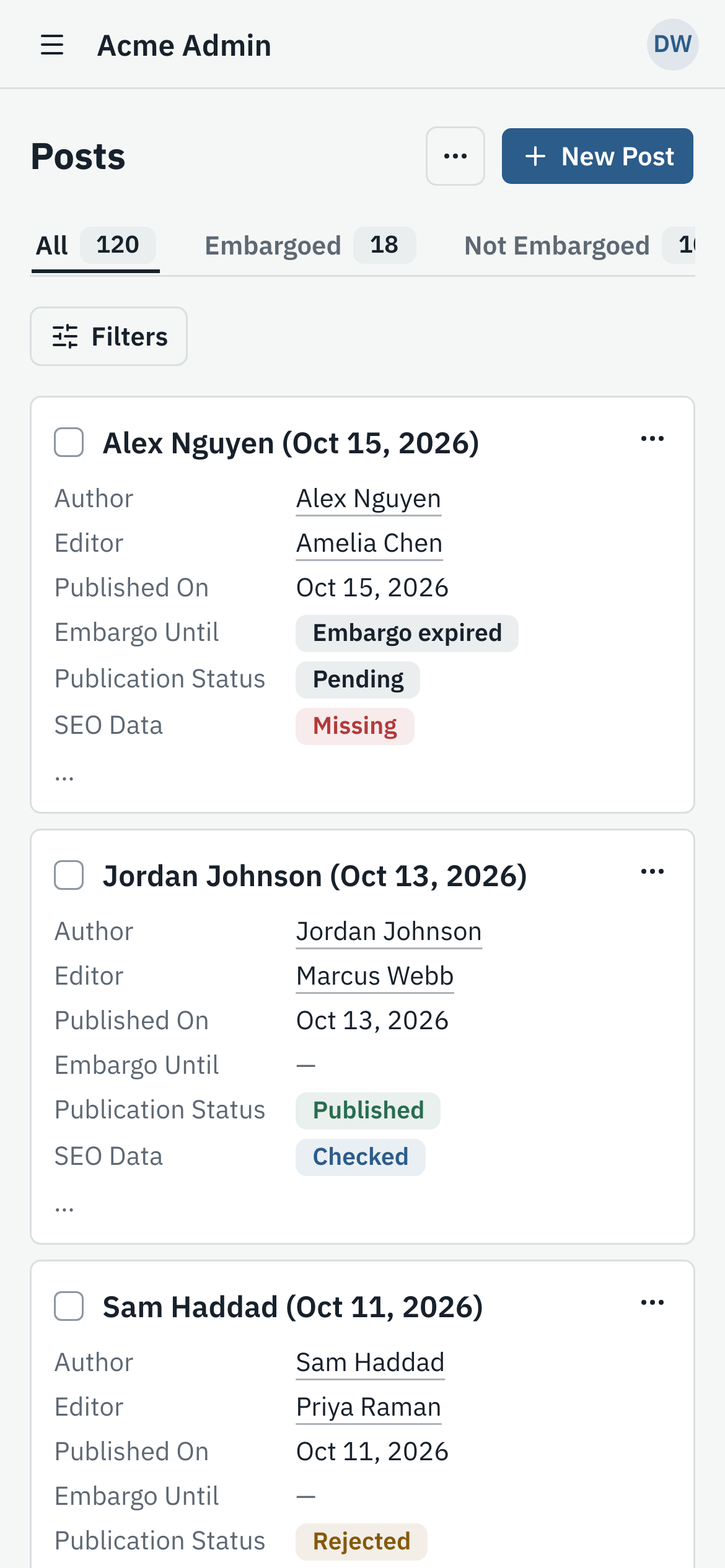
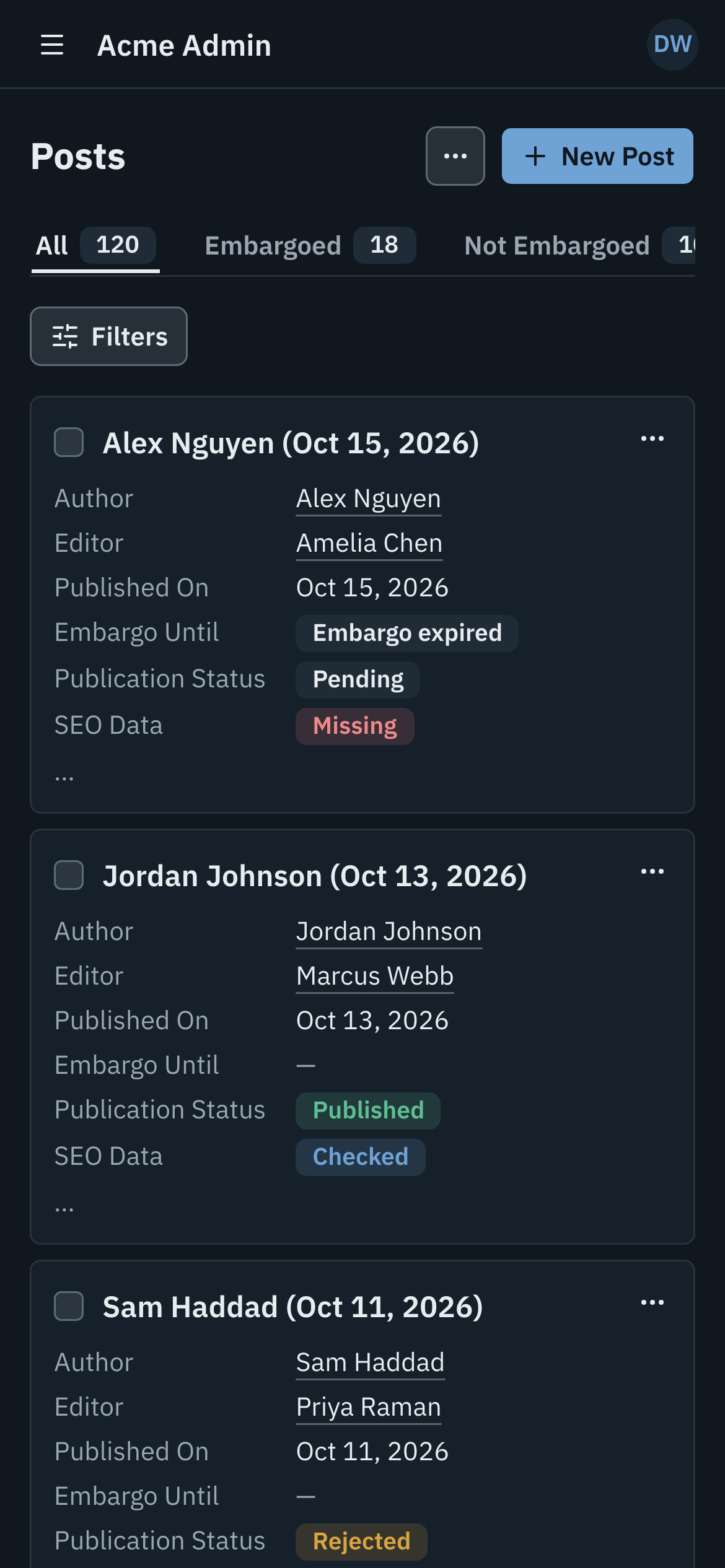
A registration like this renders as a table on a wide screen and as cards on a phone. Choose a part of the file to find it in the screenshot.
Add an API, MCP, and responsive React frontend to your ActiveAdmin.
Keep your app/admin files as they are. ReactiveAdmin reuses their controllers, filters, scopes, forms, and authorization, so you don't write serializers, API controllers, or pages per resource.
A registration and the screen it renders
app/admin/posts.rb
ActiveAdmin.register Post do end
The same file also answers API clients and agents
JSON API
GET /api/admin/posts?scope=embargoed

{
  "resource": "posts",
  "rows": [
    { "id": "5005",
      "cells": {
        "publication_status":
          { "type": "status", "label": "Pending",
            "variant": "neutral" },
        …
      },
      …
    }
  ],
  "meta": { "current_scope": "embargoed",
            "total_count": 18 }
}
Typed values, not HTML. The OpenAPI document lists only what the signed-in admin may access.
MCP server
tools/call

{
  "name": "list_records",
  "arguments": {
    "resource": "posts",
    "scope": "embargoed",
    "order": "created_at_desc"
  }
}
Agents call the same API as the admin their token belongs to. MCP is off until you turn it on, and each resource is read-only until you opt it in.
What stays and what's new
Stays as it is
- Your app/admin registrations and the DSL
- Controllers and their overrides
- Filtering, scopes, sorting, and pagination
- Authentication and your authorization adapter
- Formtastic forms and Arbre show pages
- The classic admin, at the same URLs, as the fallback
Install
bundle add reactiveadmin
bin/rails generate reactiveadmin:install
Getting started covers configuration, routes, and the client.